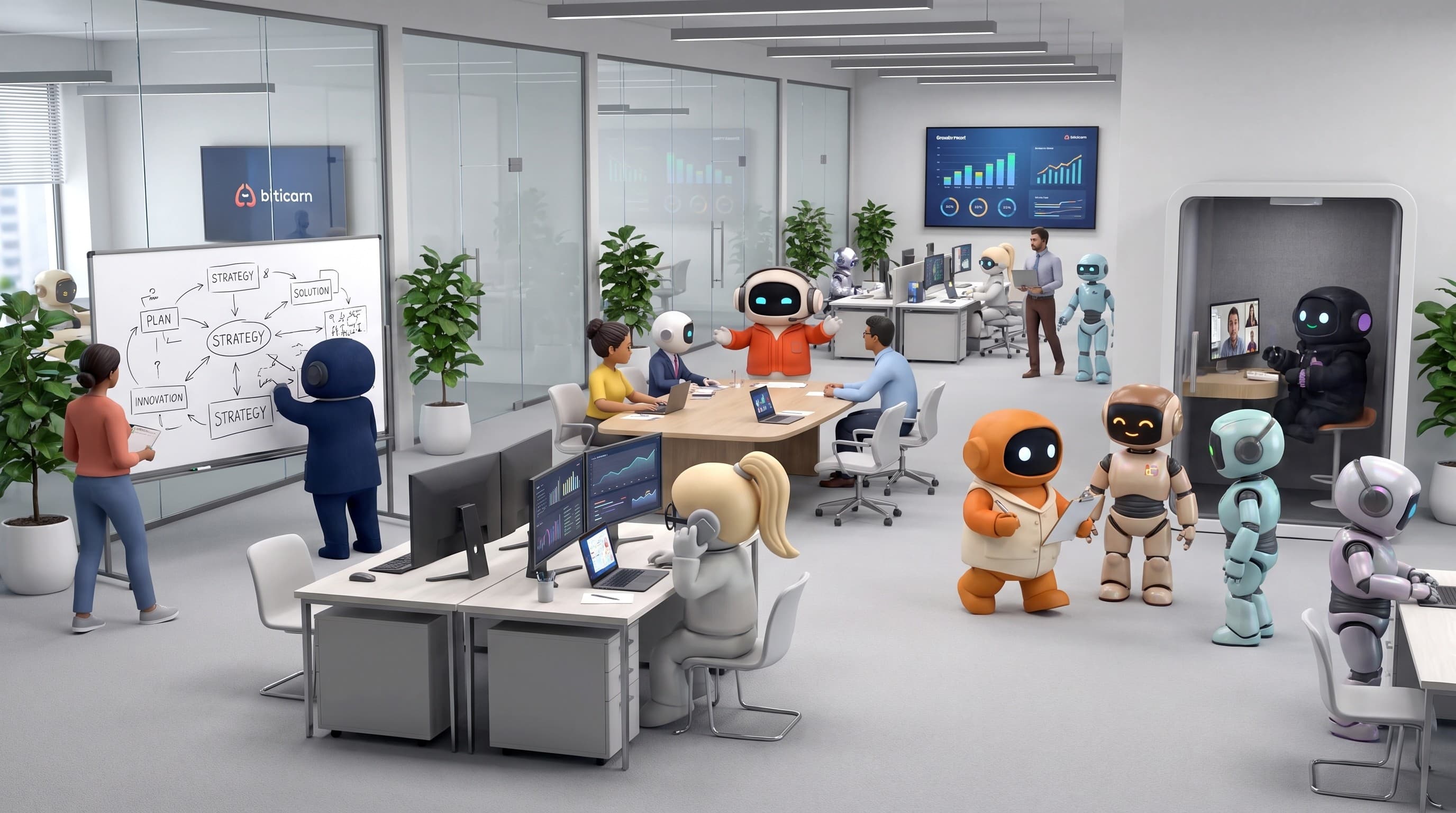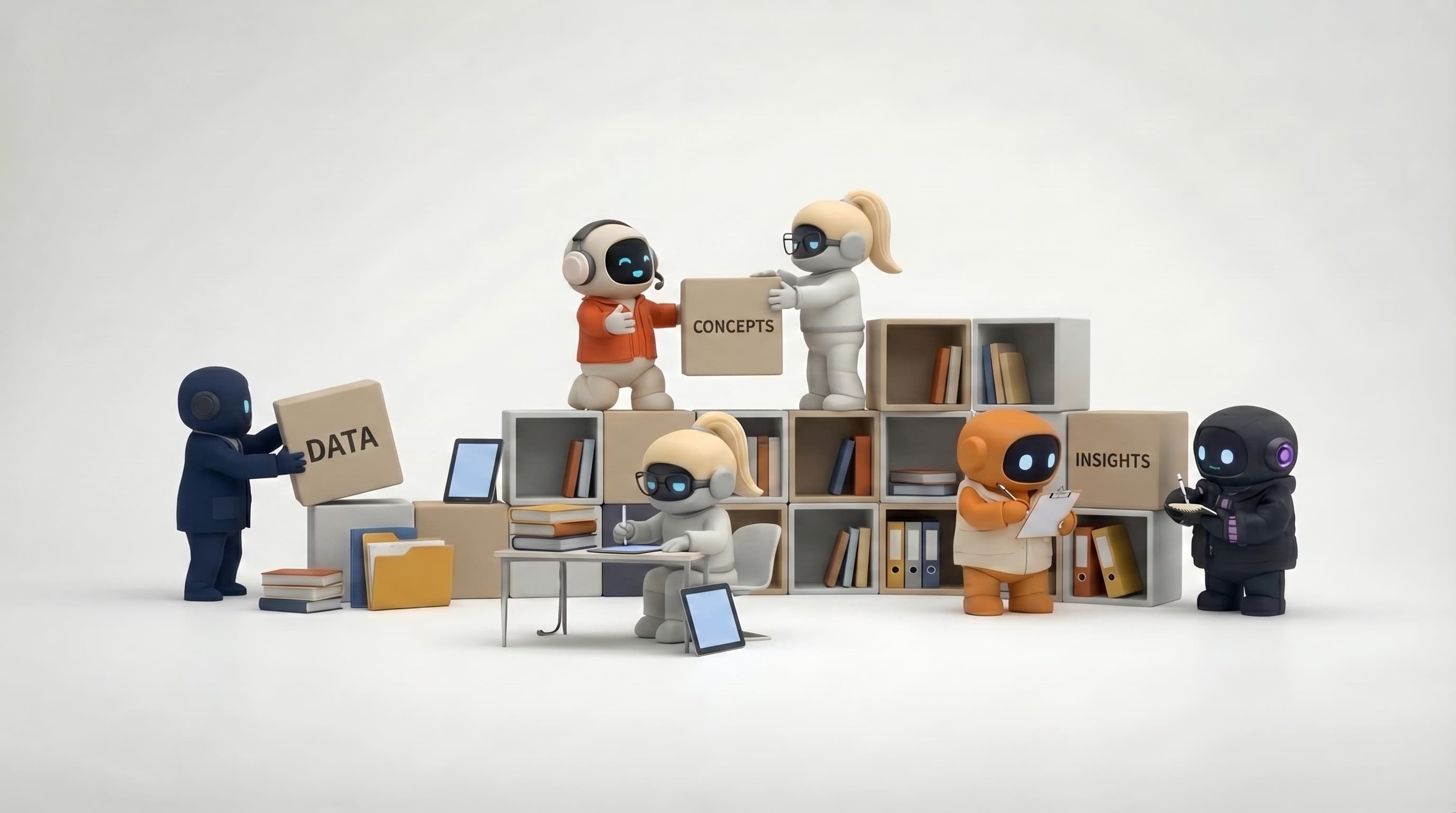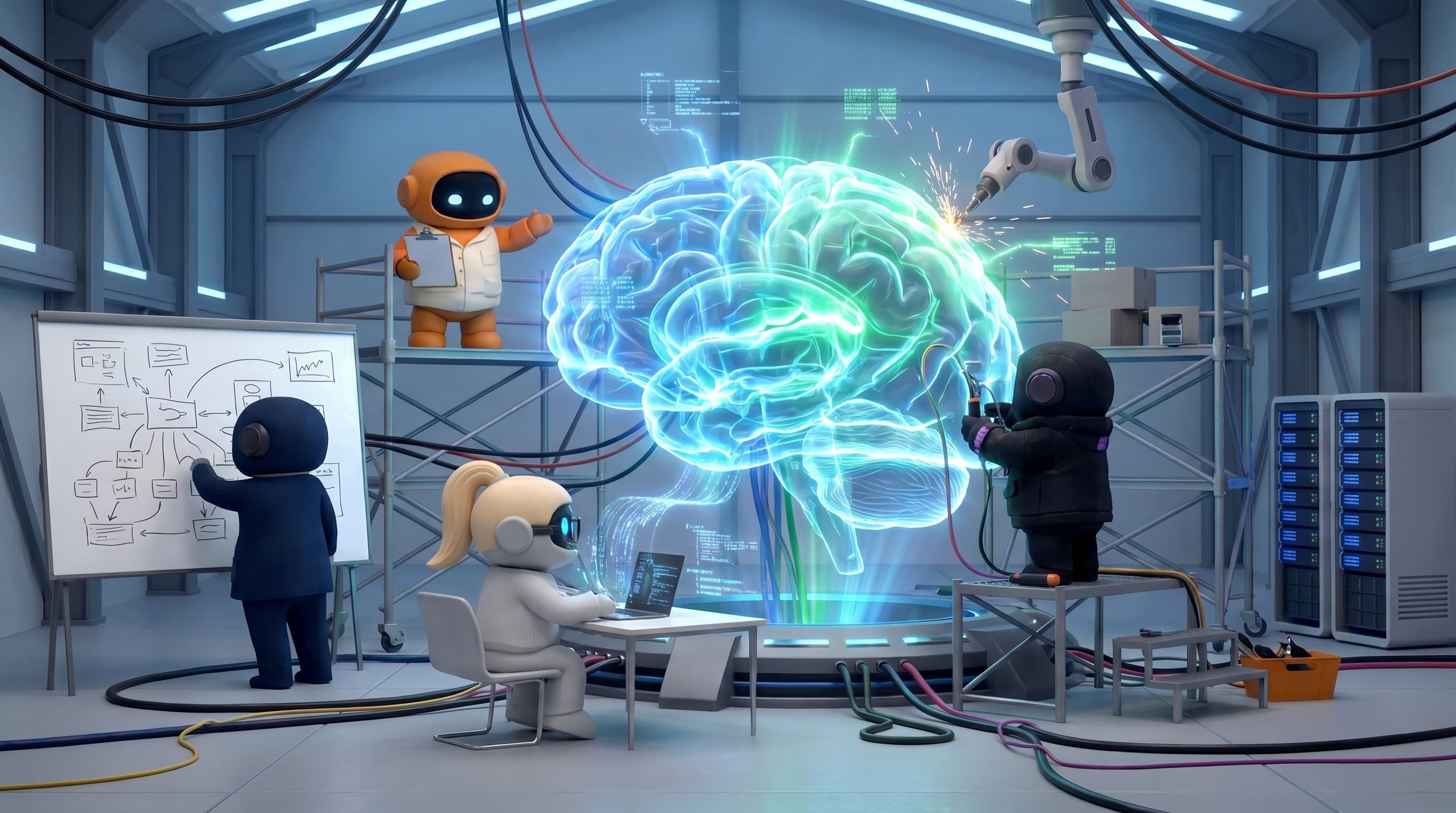

A company brain is a single, shared source of truth that every AI tool and agent in your business draws from, so they all answer with the same facts, voice, and context instead of guessing. It's the difference between an AI that knows how your company works and an AI that knows how companies in general work.
Key takeaway: Most AI tools fail at work not because the model is weak, but because it has no memory of your business. A company brain fixes that by giving every agent one curated, trusted context to read from, so output stops being generic and starts being yours.
The problem: your AI has amnesia
You've probably noticed it. You ask ChatGPT to write a sales email and it invents a value proposition you'd never use. You ask an AI tool to summarize a deal and it has no idea who the customer is. Every session starts from zero. Every tool knows nothing about the last one.
That's because the intelligence lives in the model, but the context lives in your head, and in scattered docs, Slack threads, CRM fields, and email. You're the one stitching it together. You're the company brain. Every time you brief an AI tool, paste in background, or correct its tone, you're manually loading context that should already be there.
This doesn't scale. Add a second tool and you brief it separately. Add a teammate and they brief their tools differently. Now your "AI strategy" is five tools each holding a slightly different, slightly wrong version of who you are. (If this sounds familiar, see stop repeating yourself to AI.)
What a company brain actually is
A company brain is a curated set of documents and connected sources that your team agrees is true today, and that every AI agent reads from before it acts. Think of it as the long-term memory layer for every AI agent you use.
It usually holds:
-
Who you are. Positioning, ICP, value props, brand voice, do's and don'ts.
-
How you work. SOPs, processes, naming conventions, approval rules.
-
What's true now. Current pricing, product facts, customer list, active priorities.
-
Live context. Connected tools (email, calendar, CRM, Notion, Drive) the brain can pull from in real time.
The critical word is curated. A company brain is not "every file we have." Dumping your entire Drive into an AI makes answers worse, because the model can't tell the 2022 pricing deck from this quarter's. A good brain is small, trusted, and current. (We wrote a full one-day playbook on this: how to build a company knowledge base for AI.)
Company brain vs. the alternatives
| Prompting each time | A wiki / Notion | RAG you build yourself | Company brain | |
|---|---|---|---|---|
| Who reads it | One chat, once | Humans | One app you coded | Every AI agent, automatically |
| Stays current | No | If someone updates it | You maintain pipelines | Curated, connected to live tools |
| Consistent voice | No | N/A | Depends | Yes. One source, all agents |
| Setup effort | Zero, but repeated forever | Low | High (engineering) | Low (curate, don't code) |
| Who it's for | Nobody, long-term | People, not AI | Eng teams | Founders & small teams |
A wiki is a brain for humans, and AI can't reliably read it. Home-rolled RAG is powerful, but it's an engineering project. A company brain is the founder-friendly middle: the trust and structure of a knowledge base, wired so your agents actually use it. (If you're weighing the actual products, see our guide to the best company brain for startups.)
Why it matters more in 2026
The shift this year is from AI assistants to agents: software that doesn't just answer, but plans and executes across your tools.
An assistant with no memory is annoying. An agent with no memory is dangerous. It'll confidently send the wrong email, quote the wrong price, or contradict what another agent just told a customer. The more your agents can do, the more it matters that they all share one brain. Shared context is what turns a pile of disconnected agents into something that behaves like an actual team, and giving AI a single source of truth is what keeps that team from inventing facts.
It is also why the brain, not the agent, is the part worth investing in. Models and agents are becoming interchangeable. The knowledge of how your company actually runs is not.
How a company brain works in practice
Here's the same task with and without one.
Without a brain: "Write a follow-up to the Acme deal." The AI asks who Acme is, what stage the deal is at, your tone, and your pricing. You spend five minutes briefing it, every time.
With a brain: "Write a follow-up to the Acme deal." The agent already knows Acme from your CRM, pulls the last thread from email, applies your brand voice and current pricing from the brain, and drafts it correctly the first time.
That's not a smarter model. It's the same model with memory. The work moves from you briefing the AI to the AI just knowing.
How to build a company brain
You build a company brain by writing down what your team agrees is true today, connecting the tools where facts change fast, and making every AI agent read from it before it acts. In practice that is five steps:
-
Write down what's true now. Positioning, ideal customer, pricing, product facts and active priorities. One short, dated page each.
-
Add how you work. SOPs, approval rules, brand voice and the things you never say.
-
Connect, don't copy. Link the tools where facts change daily (CRM, email, calendar, docs) so agents look them up live instead of reading a stale export.
-
Cut aggressively. Leave out old decks, drafts and anything nobody would defend in a meeting. A small, trusted brain beats a large, noisy one.
-
Give it an owner. When pricing or positioning changes, the brain changes the same day. A brain without an owner goes stale within a quarter.
For the full version, see our one-day playbook on how to build a company knowledge base for AI.
A company brain for AI agents
A company brain for AI agents is the shared memory your agents read before they act, so every agent works from the same facts, voice and rules, whichever one is doing the job. Agents reach it in two ways:
-
Inside your workspace, agents read it automatically on every task. Nobody pastes context in.
-
Outside it, any AI tool that speaks the Model Context Protocol, such as Claude, ChatGPT or Cursor, can query the same brain through an MCP server. Your coding assistant and your sales agent then quote the same pricing.
Without a shared brain, each agent keeps its own memory, and those memories drift apart the first time something changes.
How Agently does it
In Agently, the Brain is the shared memory that Jarvis, your AI chief of staff, reads before it acts. It holds the documents you upload, the workspaces you sync (Notion, Confluence, Dropbox and Coda), and the notes Jarvis keeps as it works, each one versioned. When a task needs something that lives in another tool, like a Gmail thread, your calendar or a CRM record, Jarvis looks it up live rather than working from a stale copy. On the Enterprise plan, the Brain also tracks when each fact was true, so agents can tell this quarter's pricing from last quarter's.
The same Brain is reachable from Claude, ChatGPT and Cursor over MCP, so the AI tools you already use work from the same facts as Jarvis.
You curate it once and every agent inherits it. Add a fact to the brain and Jarvis, your teammates and your connected tools all know it: no re-briefing, no five tools holding five versions of the truth. Brief once, remembered everywhere.