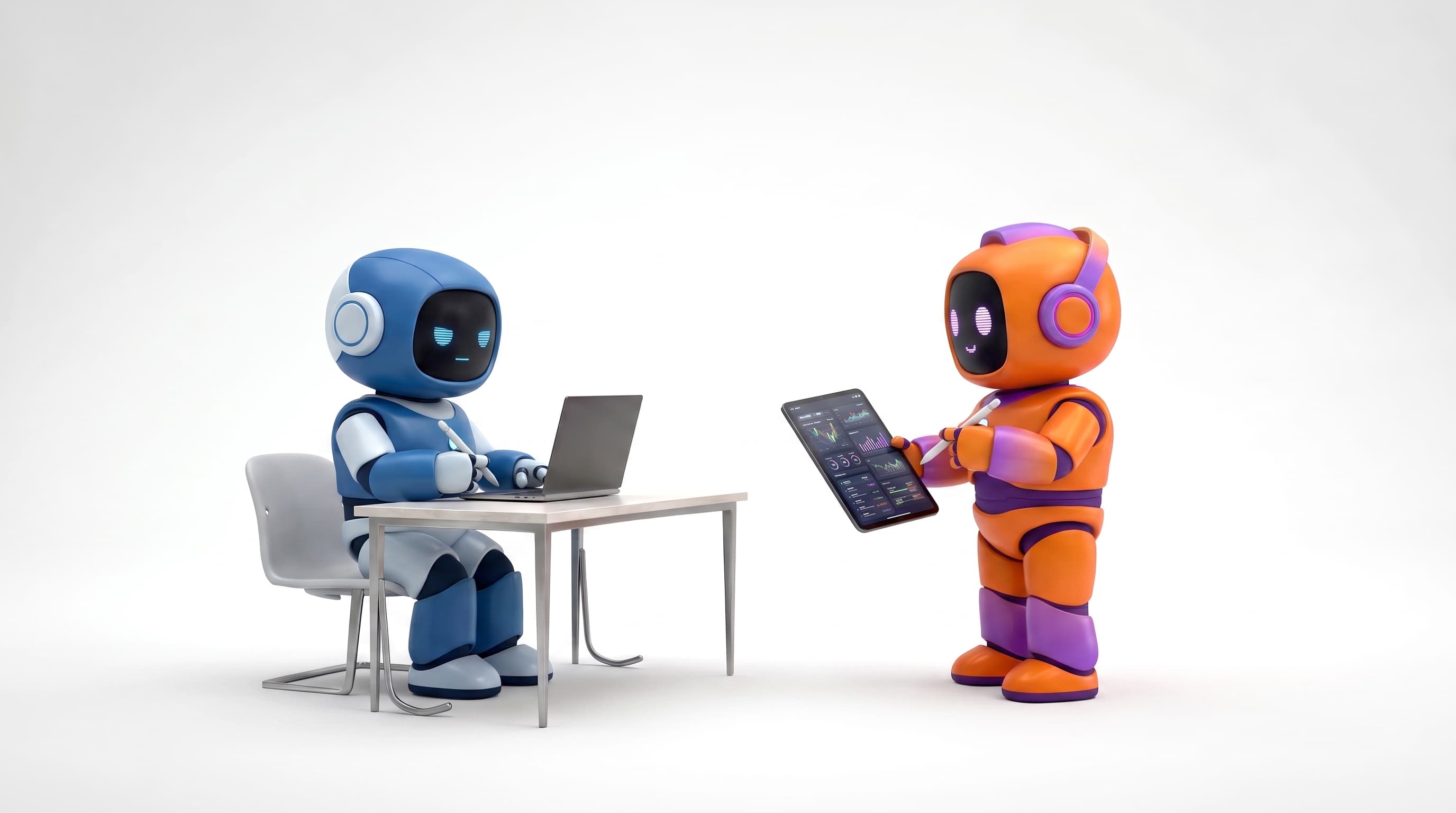

Claude and Gemini are both top-tier, so the real question is whether you want the best writing and reasoning, or the assistant already inside the tools you use every day. Claude leads on writing, coding, and careful reasoning; Gemini leads on multimodal work, huge context windows, and native Google Workspace integration.
Key takeaway: Choose Claude when the quality of what comes out matters most, writing, code, nuanced analysis. Choose Gemini when you live in Google Workspace or need to ingest very large, mixed-media documents in one pass.
Claude and Gemini are two of the most capable AI assistants available, and for many teams the decision comes down to a single question: do you want the assistant with the best writing and reasoning, or the one already living inside the tools you use every day? Claude, from Anthropic, has built its reputation on careful reasoning, natural writing, and strong coding. Gemini, from Google, is built for scale and integration, with enormous context windows and native ties to Google Workspace.
This guide goes past the headlines. We compare Claude and Gemini across the dimensions that actually change your day-to-day work: reasoning, writing, coding, multimodal ability, context length, ecosystem, and price. If OpenAI is also on your shortlist, pair this with ChatGPT vs. Claude and ChatGPT vs. Gemini.
Quick verdict
Choose Claude if your work is writing-heavy, code-heavy, or depends on careful, nuanced reasoning, and you want an assistant that is tool-agnostic. Choose Gemini if you live in Google Workspace, work with very large documents or mixed media, or want AI bundled with tools you already pay for. Both are excellent; the deciding factor is usually your existing stack and the kind of work you do most.
The fundamental difference
Claude: reasoning, writing, and coding first
Anthropic has positioned Claude around output quality and trustworthiness. In practice that shows up as writing that needs less editing, reasoning that holds together over long, complex prompts, and coding help that developers consistently rate at or near the top. Claude reaches you through its own web and desktop apps, a well-regarded API, and features like Projects and Artifacts that keep context and generated work in one place. Anthropic also created the Model Context Protocol, the open standard many tools now use to connect AI to external data (announcement).
The trade-off: Claude is not embedded in a productivity suite by default. It is a superb assistant you bring to your work, not one that is already inside your email and docs.
Gemini: scale, multimodal, and Google-native
Google built Gemini for reach. It is natively multimodal, handles some of the largest context windows in the market, and is woven directly into Gmail, Docs, Sheets, Slides, and Meet. For anyone already on Google Workspace, Gemini shows up where the work already happens, and it can draw on Google's search and data ecosystem.
The trade-off: Gemini's biggest advantages, deep Workspace integration and bundled pricing, mostly matter if you are a Google shop. Outside that world, some of its edge fades.
Feature comparison
Reasoning and analysis
Claude is widely regarded as a leader in careful, step-by-step reasoning, particularly on nuanced or ambiguous tasks where a wrong assumption early on derails the answer. It tends to hedge appropriately and stay coherent across long, multi-part prompts. Gemini is also a strong reasoner and pulls ahead when a problem spans multiple formats at once, such as reasoning over a long PDF that mixes text, tables, and charts. For pure text reasoning, most users give Claude a slight edge; for multimodal reasoning, Gemini.
Winner: Claude for text-heavy nuance, Gemini for multimodal reasoning.
Writing quality
This is Claude's signature strength. Its drafts read naturally, hold a consistent voice, and usually need less cleanup, which matters when you are producing content, emails, or documentation at volume. Gemini writes competently and is improving, but more users reach for Claude when the writing itself is the deliverable.
Winner: Claude.
Coding
Developers consistently rate Claude among the best coding assistants for generation, refactoring, debugging, and explaining unfamiliar code, and it pairs well with tools like Claude Code and IDE integrations. Gemini is a capable coder with the added benefit of tight ties to Google's developer tooling and cloud. For general-purpose coding quality, Claude usually leads; inside a Google Cloud workflow, Gemini is very convenient.
Winner: Claude for coding quality, Gemini for Google Cloud-native development.
Multimodal and context length
Gemini was built multimodal from the ground up and offers some of the largest context windows available, on the order of a million tokens, which lets it ingest very long documents, large codebases, or hours of transcript in a single pass. Claude also handles text and images and offers large context windows (generally in the hundreds of thousands of tokens, with larger options available), but Gemini's ceiling on raw context and mixed media is higher.
Winner: Gemini.
Ecosystem and integrations
Gemini's ecosystem advantage is Google Workspace: it is already inside the apps millions of teams use, and it plugs into Google's broader products. Claude's ecosystem is different in shape, its API is popular with builders, and its authorship of MCP means a fast-growing set of tools and MCP servers connect to it. If your center of gravity is Google, Gemini wins on integration; if you are building on top of an AI or connecting many tools, Claude's open, API-first approach is compelling.
Winner: Gemini for Workspace users, Claude for builders and tool-connectors.
Pricing and access
Both follow a similar consumer model: a capable free tier and a paid personal plan in the ballpark of twenty dollars per month for access to the strongest models and higher limits, plus usage-based API pricing for developers. The practical difference is bundling. Gemini's paid tier is often packaged with Google One or Workspace, so if you already pay Google, you may effectively get it at a discount. Claude is priced as a standalone assistant. (Always check current plans on each vendor's site, since tiers and limits change often.)
Winner: Even, with an edge to Gemini if you already pay for Google.
Side-by-side
| Factor | Claude | Gemini |
|---|---|---|
| Reasoning | Class-leading on text nuance | Excellent, strongest multimodal |
| Writing | Best-in-class, low edit overhead | Solid and improving |
| Coding | Developer favorite | Strong, great on Google Cloud |
| Multimodal | Good | Native, best-in-class |
| Context window | Large (hundreds of thousands of tokens) | Very large (around a million tokens) |
| Ecosystem | API-first, MCP, own apps | Native Google Workspace |
| Pricing | Standalone, ~$20/mo tier | ~$20/mo tier, often bundled with Google |
| Best for | Writing, coding, careful reasoning | Google users, big docs, multimodal |
| Type | Chatbot / assistant | Chatbot / assistant |
Pricing at a glance
| Plan | Claude | Gemini |
|---|---|---|
| Free tier | Yes | Yes |
| Personal paid | ~$20/month | ~$20/month, often bundled with Google One |
| Business / Team | Team plans | Bundled into Google Workspace |
| API | Usage-based | Usage-based |
| Best value when | You want the best output, tool-agnostic | You already pay for Google |
Tiers and limits change often on both sides, verify current plans before committing a team.
In practice: the same task, two tools
Say you drop in a 120-page product spec (with diagrams) and ask for a summary, a list of risks, and a customer-facing FAQ.
With Gemini, the large context window swallows the whole document, diagrams included, in one pass, and it reasons across the mixed media without you splitting the file. If that spec lives in Google Drive, Gemini reaches it directly and can drop the output into a Doc.
With Claude, you may work in large chunks depending on length, but the summary, risk analysis, and FAQ tend to come back sharper and more polished, needing less rewriting before you send them to a customer.
That captures the whole comparison: Gemini often wins on ingesting and integrating; Claude often wins on the quality of what comes out.
Best use cases
Reach for Claude when you are:
-
Writing content, documentation, or customer communication at volume
-
Generating, refactoring, or reviewing code
-
Working through nuanced analysis where reasoning quality matters most
-
Building on an API or connecting AI to many tools via MCP
Reach for Gemini when you are:
-
Living in Gmail, Docs, and Sheets all day
-
Summarizing or analyzing very large or mixed-media documents
-
Already paying for Google One or Workspace
-
Doing multimodal work across text, images, and long transcripts
Limitations to keep in mind
Neither model is infallible. Both can produce confident but wrong answers, so anything high-stakes needs review. Claude's ceiling on raw context and native multimodal breadth is lower than Gemini's. Gemini's writing, while good, more often needs an editing pass than Claude's. And model versions, limits, and pricing on both sides change frequently, so verify the current specifics before committing a team.
The reality: both are chatbots
Here is what neither Claude nor Gemini changes: they are chatbots. You ask, they answer, and then you do the work. They draft the email but do not send it. They flag the risks but do not open the tickets. They write the FAQ but do not publish it or update your CRM. For a lot of real work, the bottleneck is not a better answer, it is that a human still has to carry that answer across their tools.
That is a different category of product: an AI employee platform. Agently provides AI employees for sales, operations, marketing, support, and research that use top models like these to act across your tools. They share a company brain and work in one workspace, so instead of handing you a draft, they do the task and bring back the result. Claude and Gemini answer. Agently's AI employees act.
Bottom line
Choose Claude for best-in-class writing, coding, and careful reasoning in a flexible, tool-agnostic assistant.
Choose Gemini for the largest context windows, native multimodal ability, and deep Google Workspace integration.
Look beyond both if your bottleneck is not the answer but the doing, and you want AI employees that act with a shared brain in one workspace.
Agently provides AI employees that work alongside your team in a shared workspace, using the best models to handle sales, marketing, operations, support, and research. Try it free.